


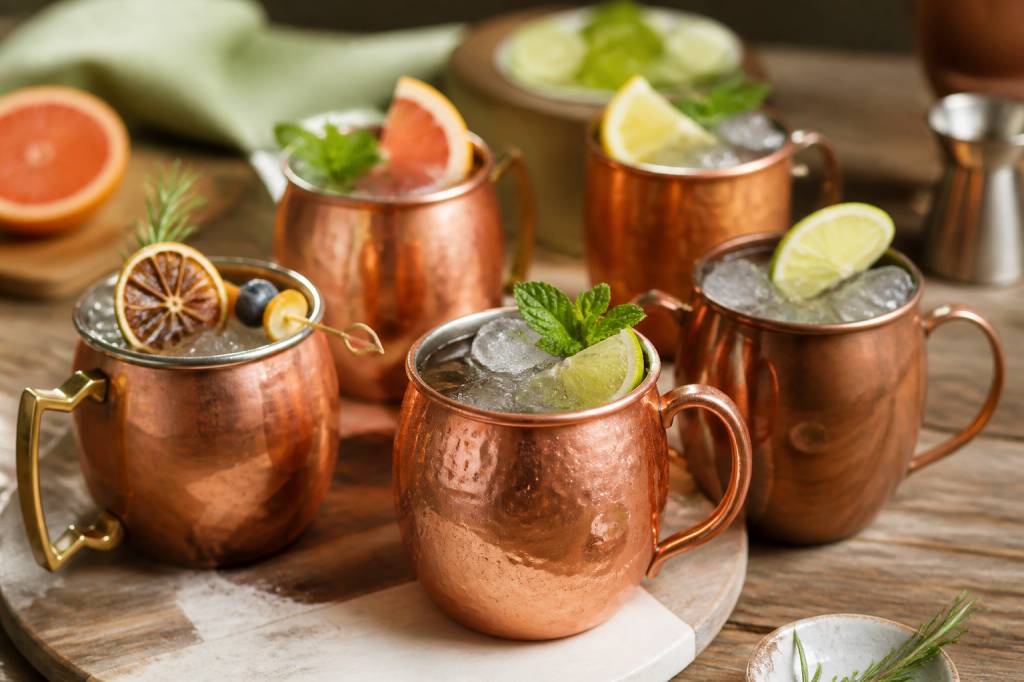
What makes a Moscow Mule a Moscow Mule?
At first glance, the Moscow Mule looks almost suspiciously simple: vodka, ginger beer, lime juice, ice. That’s it. But the drink has lasted for decades because the formula is unusually well balanced. You get the clean neutrality of vodka, the sharp acidity of lime, and the spicy, slightly sweet punch of ginger beer. The result is refreshing, bright, and easy to adapt without losing its identity.
The key point is this: a good Moscow Mule is not just “vodka with ginger beer.” It is a carefully built highball where carbonation, temperature, and ginger intensity all matter. Use a weak ginger beer and the drink flattens. Use too much lime and it turns sour. Use low-quality ice and the whole thing waters down before you finish the first sip. In other words, the Mule is simple, but not forgiving.
The classic Moscow Mule recipe
The traditional recipe is the best place to start because every variation should be compared against it. If you can make the classic well, you’ll understand how far you can push the formula while keeping the drink recognizable.
A standard build looks like this:
- 2 oz vodka
- 1/2 oz fresh lime juice
- 4 to 6 oz ginger beer, depending on the brand and your taste
- Ice
- Lime wheel or wedge for garnish
Build the drink directly in a chilled copper mug or a highball glass filled with ice. Add the vodka and lime juice first, then top with ginger beer. Stir briefly and gently to preserve carbonation. Garnish with lime.
That’s the basic formula, but small details make a big difference. Fresh lime juice matters because bottled juice tends to taste dull and sometimes bitter. The ginger beer should have enough bite to stand up to the vodka. If the ginger beer is very sweet, reduce the lime slightly and use a drier vodka. If it is aggressively spicy, the drink can handle a little more dilution and sweetness.
Why the copper mug became part of the ritual
The copper mug is not required for a Moscow Mule to taste right, but it has become part of the drink’s visual identity. There is also a practical reason people love it: copper conducts cold efficiently, so the mug quickly becomes frosty and keeps the drink feeling extra chilled.
That said, the mug does not magically improve flavor. What it does is enhance the sensory experience. A very cold vessel makes the ginger aromas feel sharper, the lime seem brighter, and the carbonation more lively. If you serve the Mule in a highball glass, the flavor will still be excellent if the ingredient balance is correct.
One caution: if you use a copper mug, make sure it is properly lined for food and beverage use. Pure copper can react with acidic ingredients like lime juice, so lined mugs are the safe choice.
Choosing the right ginger beer
This is where the Moscow Mule becomes personal. Ginger beer is not a side note; it is the backbone of the drink. The difference between brands can completely change the character of the cocktail.
In practical terms, ginger beers fall into a few broad styles:
- Bold and spicy: intense ginger heat, lower sweetness, ideal for a sharper Mule
- Balanced: moderate spice and sweetness, the most versatile option
- Sweet and mild: easy drinking, but can make the cocktail feel softer and less defined
- Artisanal or fermented: often more complex, with earthy ginger notes and natural carbonation
If you like a crisp, lively Mule, choose a ginger beer with noticeable spice and lower sugar. If you want a rounder, softer drink, a sweeter ginger beer can work well, especially with flavored variations. My advice is to test your recipe with the same brand twice before judging it. Ginger beer brands vary enough that one bottle can be a revelation and another a sugar bomb with bubbles.
Classic Moscow Mule variations worth knowing
Once the base recipe is understood, variations become easy. The trick is to change one element at a time so the drink still feels like a Mule rather than a random vodka cocktail with ginger.
London Mule
The London Mule swaps vodka for gin. This simple change brings botanicals into the mix, which can be excellent if you enjoy herbal notes. Juniper, citrus peel, and coriander from the gin layer nicely with ginger.
Best for: drinkers who want a more aromatic, slightly more complex version of the classic.
Tip: Use a dry gin rather than an overly floral one, or the drink can drift into perfume territory very quickly.
Kentucky Mule
This version replaces vodka with bourbon. The result is warmer, richer, and slightly sweeter, with caramel and vanilla notes that pair beautifully with ginger spice.
Best for: cooler evenings, barbecue menus, or anyone who likes whiskey highballs.
Tip: Choose a bourbon with enough proof to hold its own against the ginger beer. Too soft, and the drink becomes one-dimensional.
Mexican Mule
The Mexican Mule uses tequila instead of vodka. Depending on the style of tequila, the drink can lean bright and citrusy or earthy and peppery. Blanco tequila gives a clean, lively profile; reposado adds oak and softness.
Best for: fans of agave spirits who want a more vibrant, slightly rustic version.
Tip: Add a touch more lime if using reposado, since the oak can make the drink feel heavier.
Irish Mule
Here, Irish whiskey stands in for vodka. The drink becomes smooth, rounded, and slightly malty, with a gentle spice that complements ginger beer beautifully.
Best for: anyone who wants a softer, less sharp Mule.
Tip: This variation works especially well with a ginger beer that is not overly sweet, so the whiskey character stays visible.
Smoked Mule
For a more dramatic profile, use a smoky spirit such as mezcal or a lightly peated Scotch. This is not a traditional Mule, but it can be outstanding when balanced correctly. The smoke adds depth, while the ginger beer keeps the drink from becoming heavy.
Best for: experienced cocktail drinkers looking for something memorable.
Tip: Keep the lime bright and the ginger beer crisp. Too much sweetness will mute the smoke.
Fruit-forward Mule variations
Fruit can be an excellent addition, but restraint matters. The most successful fruit Mules use the fruit to support the ginger, not bury it. A splash of purée or a few slices is often enough.
Berry Mule
Fresh raspberries, blackberries, or a small amount of berry syrup give the cocktail a vivid color and a slightly tart edge. Berry flavors work well because they echo the acidity of lime.
Best for: summer service and brunch menus.
Tip: Lightly muddle the berries or use a strained puree to avoid excessive pulp in the final drink.
Apple Mule
Apple and ginger are a natural pairing. A splash of cloudy apple juice or a thin apple slice garnish can make the drink taste rounder and more autumnal.
Best for: fall menus or when you want something softer and less citrus-heavy.
Tip: Add a tiny squeeze of lemon or lime to keep the apple from tasting flat.
Pineapple Mule
Pineapple brings tropical sweetness and acidity. Combined with ginger beer, it creates a sharp, lively drink that feels almost built for hot weather.
Best for: poolside drinks and casual entertaining.
Tip: Use a restrained amount of pineapple juice. Too much, and the ginger disappears.
Low-alcohol and alcohol-free Mules
One of the most useful things about the Mule template is that it works beautifully without alcohol. This is especially relevant if you want a drink with the same refreshing structure but less strength.
A simple non-alcoholic Mule can be made with:
- Fresh lime juice
- Ginger beer
- Ice
- Optional ginger syrup for added intensity
- Cucumber, mint, or basil for a fresh herbal note
If you want more depth, replace part of the ginger beer with a strong ginger infusion or a small amount of non-alcoholic spirit. The goal is to preserve the contrast between sharp lime and spicy ginger. Without that contrast, the drink becomes just another sweet soda.
From a health perspective, the alcohol-free version can also be easier to adapt for lower-sugar service. Many ginger beers are still quite sweet, so choosing a dry or reduced-sugar version can make a big difference.
How to build a better Mule at home
Technique matters more than people think. The difference between a decent Mule and a really good one often comes down to temperature, dilution, and ingredient order.
- Use plenty of ice: larger cubes melt more slowly and keep the drink colder
- Chill your glass or mug: this helps carbonation and preserves the crisp finish
- Add ginger beer last: it protects the bubbles
- Stir gently: one or two turns is enough
- Taste your ginger beer first: adjust lime accordingly
If you are making several drinks at once, pre-batch the vodka and lime juice, then top each serving with ginger beer right before serving. This keeps the texture bright and avoids a flat, over-diluted cocktail. Nobody ever said, “I wish my Mule had less fizz.”
Food pairings that actually work
The Moscow Mule is versatile at the table because ginger and lime can cut through richness. That makes it useful with foods that might overwhelm lighter cocktails.
Good pairings include:
- Spicy Asian dishes, especially with chili, sesame, or soy
- Fried foods, where acidity helps reset the palate
- Grilled seafood, such as shrimp or fish tacos
- Roasted chicken with herbs and citrus
- Salty snacks like nuts, pretzels, or crisps
The main rule is to match intensity. A bold bourbon Mule can stand up to grilled meats, while a classic vodka Mule works better with lighter fare. If the dish is very sweet, choose a drier ginger beer so the cocktail does not disappear into the meal.
What to expect from the ginger side of the equation
Ginger is what gives the Mule its backbone. Beyond flavor, it also contributes a warming sensory effect that many people interpret as “spice.” That sensation comes from compounds in ginger such as gingerols and shogaols, which are responsible for the root’s distinctive bite.
In cocktail terms, this means a well-made Mule can feel more dynamic than a standard vodka soda. The ginger adds length on the palate, while the lime gives the finish a clean exit. That is why the drink often feels refreshing without being bland.
If you enjoy ginger-based beverages, the Mule is a smart starting point because it is easy to customize. Want more bite? Use a stronger ginger beer or add a sliver of fresh ginger. Want a smoother profile? Choose a sweeter, more carbonated style and reduce the lime slightly.
Which type of Moscow Mule should you try first?
If you are new to the drink, start with the classic Moscow Mule. It teaches you the core balance between vodka, lime, and ginger beer. Once you know how that tastes, move to a variation based on the spirit you already enjoy most.
Here is a simple way to choose:
- Prefer clean, crisp drinks? Try the classic or the Mexican Mule
- Like botanical flavors? Try the London Mule
- Prefer warm, rich notes? Try the Kentucky or Irish Mule
- Want something bolder and more distinctive? Try mezcal or smoked variations
- Need a non-alcoholic option? Build a ginger-lime mule with fresh herbs
The real beauty of the Moscow Mule is that it rewards experimentation without demanding complicated technique. A few well-chosen ingredients, kept cold and balanced, can produce a cocktail that feels both classic and endlessly adaptable. And if your first attempt is slightly too sour or a little too sweet, that is not failure; that is data. Welcome to mixology.